Integrating Azure Wonka into Your Creative and Business Workflows
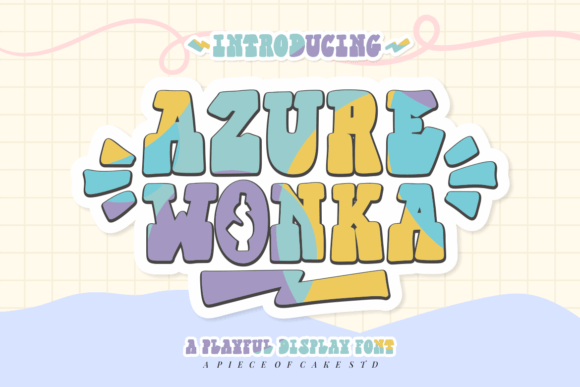
In the crowded landscape of digital design, selecting the right typeface is often the difference between a project that feels generic and one that resonates with its audience. Azure Wonka has emerged as a distinctive choice for designers, marketers, and content creators who need a display font that balances playfulness with professional polish. This cute and playful display font is not merely a decorative element; it is a functional tool that can streamline your creative process when integrated correctly into your broader workflow. Whether you are designing greeting cards, crafting magazine headlines, developing logos, or creating social media assets, understanding how to deploy Azure Wonka effectively can enhance both efficiency and visual impact.
Understanding the Role of Display Fonts in Project Planning
Before diving into specific applications, it is essential to recognize where a font like Azure Wonka fits within the hierarchy of a design project. Display fonts are designed for large sizes and short bursts of text. They are not intended for body copy or long-form reading. Therefore, the first step in any workflow involving Azure Wonka is defining its scope. This font serves as an accent, a hook, or a brand identifier. It captures attention immediately, making it ideal for headers, titles, and standalone graphic elements.
When planning a new project, consider the emotional tone you wish to convey. Azure Wonka exudes a sense of whimsy and approachability. If your goal is to create a serious, corporate financial report, this font may not align with your objectives. However, if you are working on a children’s book cover, a bakery logo, a lifestyle blog header, or a promotional flyer for a community event, the playful nature of Azure Wonka becomes a strategic asset. By identifying these use cases early in the planning phase, you avoid the common pitfall of forcing a stylistic mismatch later in the production cycle.
Pre-Production: Preparation and Compatibility Checks
Successful implementation begins before you open your design software. Ensuring that Azure Wonka is compatible with your existing toolkit is a crucial step in maintaining a smooth workflow. Most modern design platforms, including Adobe Illustrator, Photoshop, InDesign, and Canva, support standard font formats such as OTF (OpenType Font) and TTF (TrueType Font). Verify that you have the correct file format for your primary tools to prevent rendering issues or missing glyph errors.
Organization is another key factor in pre-production. If you manage a large library of assets, categorize Azure Wonka under specific tags such as "display," "playful," "handwritten," or "branding." This simple organizational habit saves time during the execution phase. When you are under a tight deadline, knowing exactly where your resources are located allows you to focus on creativity rather than administration. Additionally, check the license terms associated with the font. Understanding whether the license covers personal use, commercial projects, or web embedding ensures that you remain compliant and avoids legal complications down the line.
Execution: Practical Applications in Design Workflows
Once prepared, integrating Azure Wonka into your actual design work requires a balance of creativity and restraint. Because the font is highly stylized, it interacts strongly with other visual elements. Here are several practical scenarios where Azure Wonka adds significant value:
- Greeting Cards and Invitations: The playful curves of Azure Wonka make it perfect for celebratory contexts. When designing birthday cards, baby shower invitations, or holiday greetings, use the font for the main message. Pair it with a clean, sans-serif font for the details such as date, time, and location. This contrast ensures readability while maintaining the festive mood.
- Logo Design and Branding: For small businesses, especially those in the food, education, or creative sectors, Azure Wonka can serve as the cornerstone of a logo. Its unique character helps establish brand identity. However, ensure that the logo remains legible at smaller sizes. Test the font across various scales, from business cards to social media avatars, to guarantee consistency.
- Magazines and Editorial Layouts: In editorial design, Azure Wonka works best for pull quotes, section headers, or feature titles. It breaks up the monotony of standard serif or sans-serif body text, guiding the reader’s eye through the layout. Use it sparingly to highlight key sections without overwhelming the reader.
- Social Media Graphics: In the fast-paced world of social media, grabbing attention within seconds is critical. Azure Wonka’s bold and friendly appearance makes it ideal for Instagram stories, Pinterest pins, and Facebook post headers. It stands out against photographic backgrounds, especially when used with high-contrast colors.
Pairing Azure Wonka with Complementary Typefaces
A common mistake in using display fonts is pairing them with other decorative typefaces, which creates visual clutter. To maintain professionalism and clarity, pair Azure Wonka with neutral, structured fonts. Simple sans-serifs like Helvetica, Arial, or Open Sans provide a stable foundation that allows Azure Wonka to shine without competing for attention. This combination creates a visual hierarchy that guides the viewer naturally from the headline to the supporting information.
Quality Control and Consistency Across Platforms
After the initial design phase, quality control becomes paramount. Different screens and printing methods can alter the appearance of fonts. When using Azure Wonka for digital projects, check how it renders on various devices, including mobile phones, tablets, and desktop monitors. Ensure that the spacing (kerning and tracking) looks balanced on all screen sizes. For print projects, such as magazines or packaging, request a proof to verify that the ink density and paper texture do not distort the fine details of the font.
Consistency is also vital for long-term brand integrity. If you are using Azure Wonka for a business logo or recurring marketing materials, create a style guide. Document the specific color codes, sizes, and pairings used with the font. This documentation ensures that anyone working on future projects—whether internal team members or external freelancers—maintains the same visual standard. This level of organization reduces revision cycles and enhances overall productivity.
Long-Term Value and Workflow Efficiency
Investing time in learning how to use Azure Wonka effectively pays dividends over time. As you become familiar with its quirks and strengths, you will develop intuition for when and how to apply it. This familiarity speeds up the decision-making process in future projects. Instead of experimenting with multiple fonts for every new task, you can confidently select Azure Wonka for appropriate projects, knowing it will deliver the desired aesthetic.
Furthermore, versatile fonts like Azure Wonka reduce the need for custom illustration or complex graphic effects. The font itself carries enough visual weight and character to stand alone, simplifying the design process. This efficiency is particularly valuable for freelancers and small business owners who must manage multiple roles and tight deadlines. By leveraging the inherent qualities of the font, you can produce high-quality results with less effort.
Final Thoughts on Implementation
Azure Wonka is more than just a collection of letters; it is a versatile tool that, when used strategically, enhances communication and visual appeal. By understanding its role in the design hierarchy, preparing your workspace for seamless integration, and applying it with attention to pairing and consistency, you can elevate your creative output. Whether you are a seasoned designer or a hobbyist looking to add a touch of personality to your projects, adding Azure Wonka to your toolkit is a decision likely to yield satisfying results. Embrace its playful nature, respect its limitations, and watch as it brings a fresh, engaging energy to your work.